
Football and Class

После теста нажмите View Questions, чтобы увидеть правильные ответы.
Click here to watch a lesson about this text.
Click here to practice with a more difficult text.
Task Summary
0 of 3 Questions completed
Questions:
Information
You have already completed the task before. Hence you can not start it again.
Task is loading…
You must sign in or sign up to start the task.
You must first complete the following:
Results
Results
Time has elapsed
You have reached 0 of 0 point(s), (0)
Earned Point(s): 0 of 0, (0)
0 Essay(s) Pending (Possible Point(s): 0)
Categories
- Not categorized 0%
- Review
- Answered
- Correct
- Incorrect
-
Question 1 of 3
1. Question
-
Question 2 of 3
2. Question
English people are also very loyal to their social class, especially in industrial towns and cities of North, where I am from. One reason for this is that ‘industrial working class’ was born in early 19th century and it remained strong until 1980s. 150 years is enough to create very distinctive culture, which includes food (anything fried), sport (football, snooker, darts), politics (Labour), holidays (caravan parks) and dialect. Furthermore, each town and city has working class areas and middle class areas, so there is not much mixing between two.
To understand England, you must realise that ‘posh’ is not always good thing. Growing up in Sheffield, I knew that I was ‘posh’ because my parents were doctors and I attended private school. I couldn’t hide my ‘poshness’ because as soon as I opened my mouth it was obvious. working class people have strong local accent. middle class people don’t. But I hated being posh. It was fine at school – posh people were in majority there – but at scouts and tennis I felt like other kids looked down on me because I wasn’t ‘one of them’.
-
Question 3 of 3
3. Question
Although class differences are fading, especially now that 50% of young people go to university and there are fewer traditional ‘working class’ jobs, English people are still proud to identify as working class. In 2024 survey, 56% said they were working class and only 36% identified as middle class. In North of England, 64% claimed to be working class. Many of these people work in offices, have two cars and big house with garden, and send their kids to university. But culturally they are proud to be working class, just like they are proud to support their local football team.
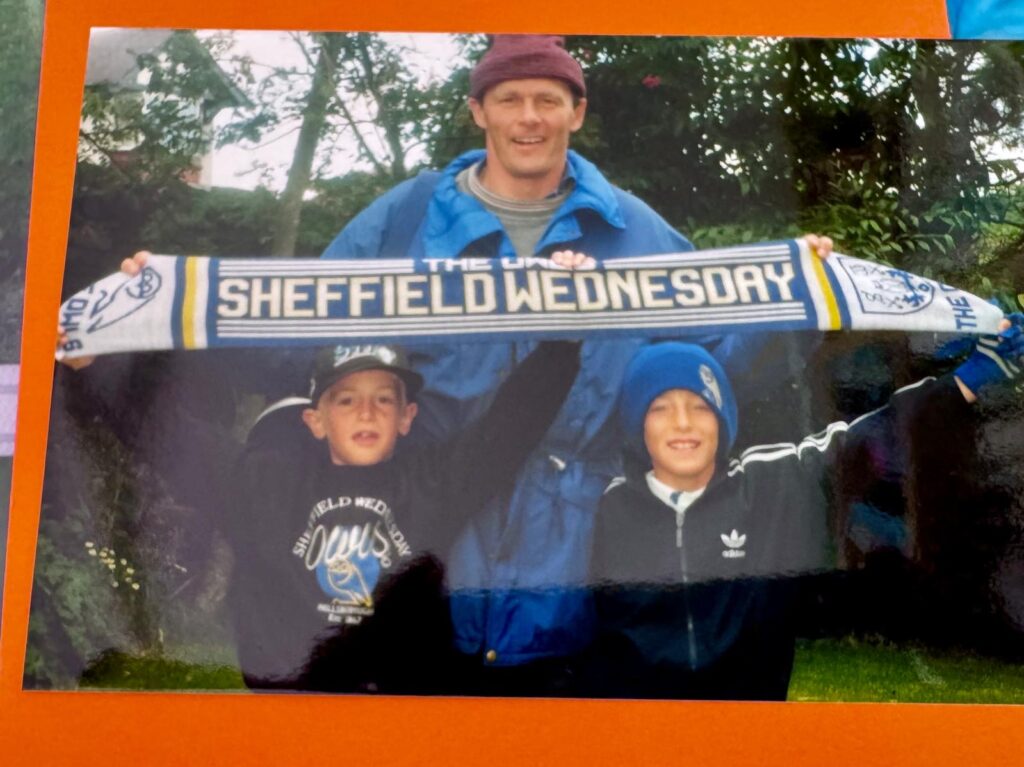
In fact, sometimes I think that my love for Sheffield Wednesday is connected to my desire to connect with my working class neighbours. I can’t talk like them, drink in their pubs or live on their streets. But I can share their joy when Owls win and their pain when we lose again…
